Issue #91 ·
Plant Points: A Simple System to Eat More Plant Variety
🌱 Gamifying your diet to eat more whole foods, why it's better to be skeptical than cynical, and a quick note on your emotions
Hello friends,
Let's be honest - getting enough variety in our diet is tough.
I know firsthand how easy it is to fall into a routine of eating the same few convenient foods day after day.
Maybe it's that same turkey sandwich or the bag of baby carrots you mindlessly munch on.
But I recently learned something that helps how I think about healthy eating:
When it comes to plant foods, variety might matter more than quantity.
Introducing the Plant Points System
This week in building health 👇
How the Plants Point System Works
Give yourself 1 Full Point:
For each unique whole plant you eat
For different colored varieties of the same plant
So for example:
If you eat a salad with spinach, red cabbage, and yellow bell peppers, you'd get 3 points total - one point for each unique plant.
Give yourself 1/2 Point for using Vegetable Stock
Give yourself 1/4 Point for:
Herbs and Spices
Coffee, Tea, Extra Virgin Olive Oil, and Garlic (Let’s count garlic as a spice)
Let's say you're having a work-from-home lunch that includes:
A quinoa bowl with roasted sweet potatoes (2 points)
Topped with black beans and corn (2 points)
Garnished with cilantro and a squeeze of lime (0.5 points)
Drizzled with olive oil (0.25 points)
And you're drinking green tea with your meal (0.25 points)
Total points for this meal = 5 points
What Doesn’t Count
One-Time Points Only:
Each unique plant counts only once per week
Example: Eating carrots five different times = still just 1 point
Not Eligible for Points:
Refined grains (like white bread or pasta)
All juices, even fresh-pressed
Processed plant foods (like veggie chips or plant-based meat alternatives)
Plant extracts or supplements
What’s the rationale behind this?
Remember, we're feeding your gut microbiome, not just checking off boxes.
Your gut is like a thriving city of microbes, and each different plant you eat helps a unique community flourish. Think of it this way: just as a city needs different types of people to thrive - artists, teachers, builders, and more - your gut needs diversity to function at its best.
Research shows that people with the healthiest gut microbiomes regularly eat 30+ different plants per week.
The beauty of Plant Points is its simplicity.
No need to meal prep for hours or count calories. You can rack up points with easy additions throughout your day: a handful of pumpkin seeds in the morning, mixed greens at lunch, or different colored bell peppers for an afternoon snack.
The system works because it focuses on what to add, not what to restrict.
While you're building your daily score, you're actually building a stronger immune system, better mood, and clearer thinking—all crucial for feeling your best every day.
My favorite health things for the week
// one
New Study: These Easy Food Switches May Shield You From Type 2 Diabetes
8 minutes | Victoria Stokes
Regular readers know I frequently discuss the dangers of ultra-processed foods (because they're that important!).
This new research adds another compelling reason to limit them: a significant link to type 2 diabetes risk.
While I've shared before how ultra-processed foods impact everything from gut health to mental clarity, this study specifically shows how strategic food swaps could lower diabetes risk. It's not about perfection – it's about making informed choices when we can.
The article breaks down practical substitutions that even busy remote workers can implement without overhauling their entire routine.
// two
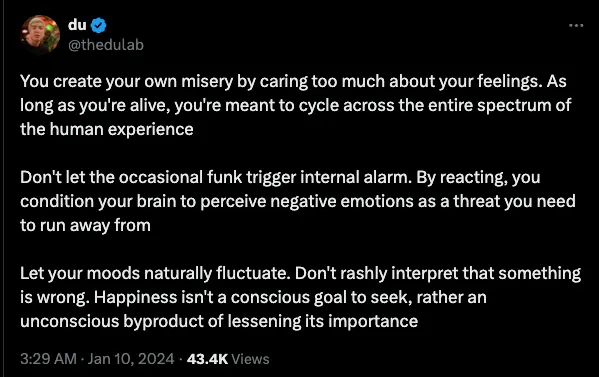
Feel Your Feelings, Then Let Them Pass
// three
Instead of Being Cynical, Try Becoming Skeptical
8 minutes | Jamil Zaki
I know firsthand how tempting it is to think cynically (a story for another time). It requires zero effort and makes me feel smarter than everyone else.
The article explores how cynicism often masks itself as wisdom but can actually hinder cognitive and social skills.
This piece is unique and insightful because it introduces the concept of "hopeful skepticism" as a healthier alternative.
Instead of assuming the worst in people, which can lead to isolation and stress, we can adopt a mindset that combines critical thinking with a positive outlook.
Until next time
Have a Healthy Weekend