Issue #85 ·
Screen Apnea: Why You Breathe Badly at Your Computer
🫁 How we breathe poorly when we're on screens, visualizing your protein, and how HRV can help you manage your stress
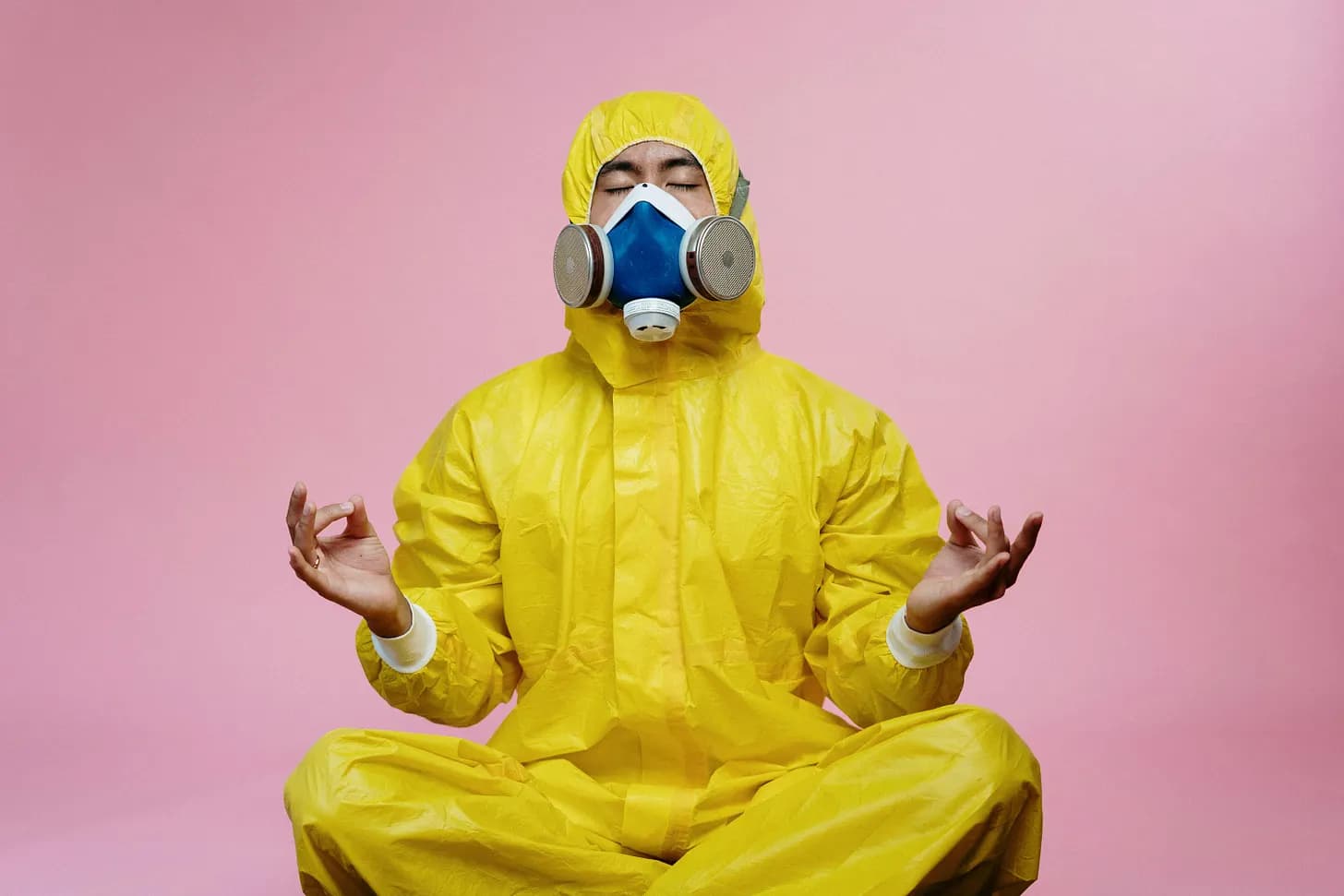
Hello friends,
As I sit here, staring at my screen while writing this newsletter, I suddenly become aware of something unsettling.
My mouth is slack, and my breathing is shallow.
I've forgotten how to breathe properly while working on my computer.
And it sneaks up on you.
How is your jaw, mouth, and breathing right now?
A lot of people breathe weird once they’re looking at their screen.
This phenomenon is called “email or screen apnea,” which refers to shallow or suspended breathing while working on a screen.
This week in building health 👇
Why Breathing Habits Matter
A large part of the population doesn’t breathe well. A few years ago, I read a book called Breath: The New Science of a Lost Art, which chronicles the author, James Nestor’s investigation into the power of breath. It includes mouth breathing, chest breathing, unconscious breath-holding, snoring, sleep apnea, and asthma.
James Nestor explained that over hundreds of years, humans have lost touch with natural breathing patterns due to poor posture and spending the day hunched over screens and devices. "If you're hunched over, you can't extend your belly."
"You can't take that soft, slow, deep breath." This results in shallow chest breathing, meaning we end up breathing more, sending stress signals to the brain.
The Impact of Screen Apnea on Modern Work
As remote work becomes more common, screen apnea is more relevant than ever.
Many of us spend hours daily in front of our computers, often unaware of how our breathing patterns change.
For remote workers lacking the natural breaks and movement of a traditional office environment, the effects of screen apnea can be pronounced.
It can lead to tension headaches, neck and shoulder pain, fatigue, decreased blood oxygen levels, and increased heart rate and blood pressure. If left unchecked, these symptoms may evolve into more serious health issues over time.
Screen apnea can increase stress and anxiety, impair concentration, trigger mood swings, decrease productivity, and contribute to feelings of overwhelm or burnout, mentally and emotionally.
For modern workers balancing multiple responsibilities in an increasingly digital world, these impacts can be challenging to manage. They can affect both their professional performance and personal life quality.
Strategies for Combating Screen Apnea
We can do a lot to manage Screen Apnea:
First and foremost, let's spend less time on screens. Go ahead and do something that isn't screen-based, preferably something that gets you active.
If you’re working at home or at the office, give yourself a quick movement break. Stand up, get some coffee, walk around the office. Then resume your work.
While you’re at your desk, here’s a simple one to ask yourself: “Am I breathing through my nose or my mouth?”
Nasal breathing is more efficient and beneficial, so stick to that as much as you can.
Breathing Your Way to Better Health
By recognizing screen apnea and improving our breathing habits, we can enhance our overall health, productivity, and life balance.
James Nestor states, "Breathing is a superpower we all have access to, but most have forgotten how to use it."
Next time you sit at your computer to tackle your inbox or join a video call, check your breath. Are you holding it? Is it shallow? Use this awareness to reset, take a deep breath, and approach your work with fresh focus and energy.
Prioritizing breath awareness in our remote work routines can combat screen apnea’s negative effects and unlock proper breathing benefits for our health and well-being.
My favorite health things for the week
// one
What 30 Grams of Protein Looks Like
16 minutes | Anika Christ, RD, CPT
Getting enough protein is very difficult.
To simplify, let’s make some assumptions since there are a lot of calculators online.
Assume 45g for women and 55g for men. What does that actually look like?
This article clarifies the confusion.
It provides a blueprint showing what 30 grams of protein looks like in various foods, so you can get a sense of how much you should be consuming.
So if you’re a woman, can you eat 1.5x what you see in the article?
If you’re a man, you need to be eating twice as much.
Start with that and see how it works for you.
// two
How Relationships Affect Your Health
8 minutes | Jill Suttie
We know the basics of staying healthy: eating well, exercising, and getting enough rest.
How often do we consider the health of our relationships? This article explains why our social health is as important as our physical and mental health.
It presents research showing that strong social ties can prevent diseases and increase longevity.
// three
What's the difference between heart rate and HRV?
14 minutes | Marco Altini
Finally, an article exploring the difference between heart rate and heart rate variability (HRV).
I’m a big fan of HRV because I use it to monitor how much stress my body is under (whether it’s physical, mental, or emotional).
This piece stands out for its clear explanation of why HRV is a better marker for our stress response than heart rate alone.
It shows how HRV changes in response to physical and psychological stress using personal data.
Until next time
I’ve been trying to get back into more regular writing.
Things have been quite hectic, but I think I’m slowly finding space to write a bit more, work on my coaching a little bit more, and bring more interesting things to you.
In the meantime,
Have a Healthy Weekend