Issue #32 ·
Loneliness and Health: Why Real-Life Connection Matters
💔 Loneliness kills, slowing down and balancing for long term health, buying a fitness tracker
This week in building health
Loneliness is even worse for you than you think
A big and extensive report on loneliness from the U.S. Surgeon General just came out recently.
There’s a lot to unpack, and I’ll share more over time, but I wanted to give quick reactions.
From the Report:
Loneliness is far more than just a bad feeling—it harms both individual and societal health. It is associated with a greater risk of cardiovascular disease, dementia, stroke, depression, anxiety, and premature death. The mortality impact of being socially disconnected is similar to that caused by smoking up to 15 cigarettes a day.1
15 cigarettes is no joke!
For myself, as someone who’s into fitness but also philosophy and spirituality, I’ve always struggled to express how important the “non-tangible” stuff is for health.
Things like purpose, meaning, emotional health, spirituality, and loneliness are tough because even though we cannot measure them in the moment, we can measure their negative outcomes down the line. (as we can see from the report above).
It also reminds me of another article on loneliness and connection from the NYT:
From that Article:
We are made to enjoy the physical presence of other human beings. We are made to enjoy rainstorms or sunshine or walks in the woods. We are made to enjoy touchable things. We cannot escape or overcome this need through technology. Our attempts to do so go against the grain of our deepest human needs and longings.
It’s a reminder that we have this body, and our bodies can see-hear-feel-and sense things that connect us to other people.
There’s something about face to face connection that is more powerful than we (currently) understand.
Digital Communication is like Processed Food
One way of thinking about it that I like is the difference between ‘processed food’ and ‘whole foods’
Another snippet from the article
Just as people have worked to revive slow, unprocessed and traditional food, we need to fight for the tangible world, for enduring ways of interacting with others, for holism. We need to reconnect with material things: nature, soil, our bodies and other people in real life. This doesn’t necessarily have to be big and dramatic. We don’t have to hurl our computers into the sea en masse.
What does this mean?
There’s a place for both in our lives. We don’t have to choose one or the other. Whole foods are nutritionally superior, but sometimes the convenience of processed food can legitimately be useful.
Similarly, we don’t have to throw out digital communication and connection. But we can’t ONLY rely on that for our sustenance.
How to construct a way through loneliness
Something I think about a lot is the idea of a ‘third place.’
In simplest terms, the ‘third place’ is somewhere that’s not home and not work. It’s a place where you can just hang out, spend time, (not have to spend), and meet up with people.
In the past it used to be the local family owned coffee shop.
It used to be churches and community centers.
These days, it’s getting harder and harder to find (free and safe) public spaces where you can just connect with other people.
What are the third places in your community that exist?
What are some third places you can build?
What are third places that used to be around for you?
My favorite health things for the week
// one
Learning how to Decelerate Your Body
8 minutes | Amanda Perry
My 60 year old client yesterday told me:
“I have no trouble going up stairs, but it’s the going down that’s REALLY hard.”
When I gave it some thought- I realized it was a problem with deceleration.
It’s actually WAY harder to stop your body from moving, than getting it to go in the first place. And usually that’s where the injuries happen. People get hurt from falls because they can’t slow their body down when it’s moving fast.
The article below addresses this from an athlete’s point of view.
Here’s an excerpt:
Deceleration drills may not be all that sexy, but keep in mind, if you’re spending a large portion of your training getting your body to jump higher, run faster, swing or kick harder, you also need to take the time to train your body to support all that awesomeness.
I’d love to find something that talks about deceleration for everyday life and ordinary fitness.
// two
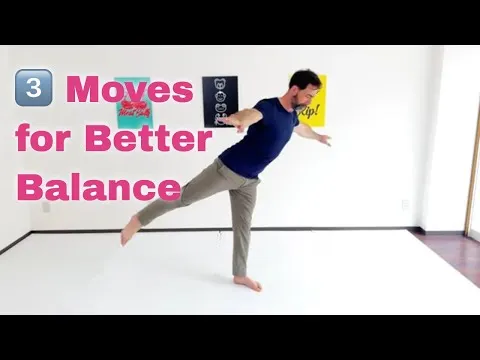
3 Single-Leg Balance Exercises for knee stability & balance
7 minutes | GMB Fitness
In line with moving well and planning for the long term, it’s important to include balance exercises into your routine.
I get this a lot from being outside.
When I hike, or play in the park, the ground is not perfectly even. And I have to pay attention and constantly adjust.
You can start practicing balance at home to get you started.
// three
5 Reasons to Buy a Fitness Tracker
7 minutes | Pete Williams
When people ask me if they should get a fitness tracker, I used to encourage against it.
Most likely it’s just going to end up gathering dust unused in some cabinet somewhere.
BUT I am coming around to it.
A few people I’ve worked with got some new fitness trackers recently, and by cooperating between their gadget + me the coach + their own awareness, it’s given great results!
Here’s a thought from this article:
I’d argue that a regular person who’s entirely uninterested in fitness might get even more out of it. How could this be so? Well, athletes and fitness enthusiasts have a singular goal that they use the tracker for, and they’ve usually optimised their life around that before they even get the tracker.
Having a tracker + some way of making meaningful sense of the data is actually powerful, and can lead to better health outcomes.
Thanks for reading!
If you like “Becoming Fit for Life” please share it with someone who can learn from it. You can also “like” this newsletter by clicking the ❤️ just below, which helps me get visibility on Substack.
Until next week,
Holt-Lunstad J, Robles TF, Sbarra DA. Advancing social connection as a public health priority in the United States. Am Psychol. 2017;72(6):517-530.